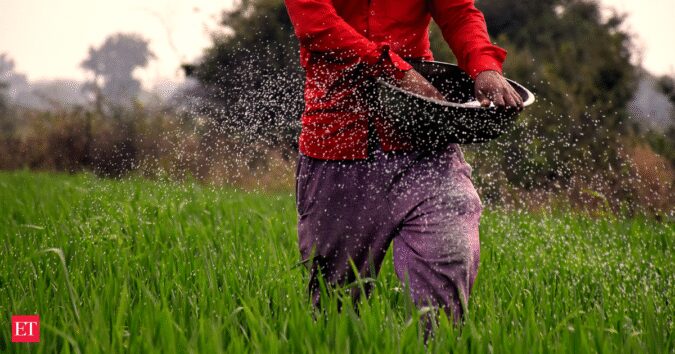
West Asia, including countries such as Saudi Arabia, Qatar, Oman and United Arab Emirates, is home to key suppliers of urea, sulphur and ammonia. Iran is the third largest producer of ammonia, a key input for soil nutrient. If the conflict persists for months, as many analysts now fear, disruptions to fertiliser production and shipping in the Gulf could ripple through global agriculture just as farmers enter a critical planting season. The result could be a delayed but severe food inflation cycle that outlasts the immediate energy shock.
Also Read| Copycat drone wars: Iran copied the US, then the US copied Iran
The overlooked vulnerability of fertiliser supply
Far less visible but potentially more consequential than oil is the fertiliser supply chain that also depends heavily on the Gulf. The Middle East hosts some of the world’s largest fertiliser production hubs and export terminals. According to Bloomberg, the region forms a critical hub for global crop nutrients and the Strait of Hormuz alone handles roughly a third of global fertiliser trade. That makes the current conflict especially disruptive. Bloomberg reported that farmers worldwide are rushing to secure fertiliser supplies as the war disrupts shipments and gas production used in fertiliser manufacturing.
The timing could hardly be worse. Northern Hemisphere farmers are entering the spring fertiliser application season, when demand peaks. Any interruption in supply during this window can affect planting decisions and ultimately reduce crop yields later in the year.
Markets are already responding. The Financial Times reported that fertiliser prices are surging as production facilities shut down and shipping routes become unreliable. The crisis has pushed granular urea prices in the Middle East up sharply and driven ammonia futures in Europe to around $725 per tonne. The key point is that fertiliser supply disruptions do not just raise input costs. They affect the quantity of food that can be produced months later.
Why the fertiliser shock could be harder to fix
Another factor increasing the risk is the limited ability of other producers to compensate for the lost supply. Russia, the world’s largest fertiliser exporter, might appear to be a natural alternative source. However industry sources told Reuters that Russian producers cannot make up for a major supply shortfall caused by the Middle East conflict. Production constraints, export restrictions and domestic supply obligations are limiting the country’s ability to increase shipments. One industry source told Reuters that while some demand could be covered temporarily, “in the long term it is too large a volume to replace.” Additional supply disruptions are compounding the problem. Analysts note that Chinese phosphate export restrictions and reduced sulphur output in Qatar are tightening global fertiliser markets at the same time. This combination of factors means that even if prices rise sharply, new supply cannot quickly enter the market.
The impact is already being felt in farming regions far from the Gulf. Farmers across several countries are scrambling to secure fertilisers ahead of planting seasons as prices climb and shipments slow, Reuters reported.
Also Read| The new kill chain: America is using AI to bomb targets in Iran
Brazil, the world’s largest soybean exporter, is particularly vulnerable because it depends heavily on imported fertilisers. Analysts warned that disruptions in the Middle East could squeeze Brazilian farmers and eventually affect global grain exports. Meanwhile in Asia, fertiliser shortages are beginning to affect production itself. Bloomberg reported that Indian urea producers have started trimming output after liquefied natural gas supplies from Qatar were disrupted by the conflict. Because fertilisers depend heavily on natural gas as feedstock, disruptions to gas markets in the Gulf amplify the supply problem further.
From fertiliser shock to food inflation
The real risk lies in how fertiliser shortages translate into agricultural production. Nitrogen and phosphate fertilisers underpin a large share of modern crop yields. According to the Financial Times, about 35 percent of global urea and 45 percent of sulphur exports pass through the Strait of Hormuz, both key inputs in fertiliser production. If these supplies remain disrupted through the planting season, farmers may apply less fertiliser or switch to lower-yield crops. That effect typically emerges months later in the form of reduced harvests and higher food prices.
The FT reported that analysts are already warning the fertiliser disruption could trigger increases in staple food prices including bread, eggs, pork and poultry in the coming months. Some analysts believe the consequences could rival or exceed the global food shock triggered by Russia’s invasion of Ukraine in 2022.
Energy markets usually adjust relatively quickly to geopolitical shocks as alternative suppliers step in or strategic reserves are released. Food systems, however, operate on seasonal cycles that cannot be accelerated. That means the full consequences of the Iran war may only appear months later. If shipping through Hormuz remains restricted and fertiliser production in the Gulf stays disrupted, the result could be a global fertiliser shortage followed by declining crop yields and rising food prices in 2026 and beyond.
Also Read| Insider info suggests Iran war can strecth on till September
The Indian situation
Fertiliser prices may surge, leading to a fresh increase in India’s subsidy bill, if supplies through the Strait of Hormuz are impacted, people aware of the matter told ET a few days ago. “If the Strait of Hormuz is closed, fertiliser movement will be restricted, pushing prices up,” the top executive of a large fertiliser company said on condition of anonymity.
Volatility in availability due to production disruption in Iran can also affect production during the upcoming kharif season, India’s longest agricultural period, which starts in June with the onset of monsoon. “Any volatility in global fertiliser prices and supply can directly affect the next kharif season, which is crucial for India’s food security and keeping food inflation in control. Iran is the third largest producer of urea and an important supplier of ammonia,” said another senior industry executive. While there is still time for the kharif season to commence, planning for imports, which includes fixing prices and signing deals, takes place in February-March, said another executive.
India needs to import an estimated two million tonnes of various fertilisers every month to meet its requirements. The country is heavily dependent on imports for fertilisers, with close to 100% reliance on imported muriate of potash and up to 60% in the case of di-ammonium phosphate (DAP). Fertilisers constitute a politically and strategically important sector, where the government spent Rs 1.9 lakh crore in subsidies in 2024-25. The subsidy is expected to cross budget estimates in this fiscal too. “We anticipate urea costs rising by 30-40% as Middle Eastern supply chains tighten, straining both farmer margins and the national subsidy budget,” Deepak Pareek, agricultural expert and consultant, told ET a few days ago.
Despite record domestic production of urea, India imported 8 million tonnes of the commodity during April-December 2025, or 85% more year-on-year, according to the Fertilizer Association of India. It also imported 5 million tonnes of DAP during the first nine months of the fiscal, up 46% year-on-year.
(With inputs from agencies)