In India, this relationship is reflected in rural livelihoods and cultural memory. The imagery of Annapurna—the provider of nourishment—symbolizes the deep connection between women and food systems. From ensuring household food security to managing livestock and conserving agro-biodiversity, women have historically safeguarded traditional food crops, kitchen gardens, and indigenous livestock practices that support dietary diversity and community resilience. Their knowledge of food preparation, storage, and seasonal nutrition has been central to maintaining intergenerational food traditions.
Today, the significance of this role is increasingly recognized in policy and development discourse. As agri-food systems confront climate change, nutritional security, and rural transformation, strengthening women’s access to knowledge, technology, institutions, and markets has become vital for building resilient and inclusive agricultural systems. Recognizing the historical contributions of women provides a foundation for designing policies and innovation systems that build on this legacy of knowledge and stewardship, enabling women to shape the future of agriculture.
Historical Continuity of Women in Agriculture
Women’s role in agriculture has deep historical roots. Anthropological evidence highlights their knowledge of plant gathering, seed selection, and cultivation practices as central to early crop domestication and the emergence of settled agriculture. In many early societies, women’s understanding of local ecosystems, seasonal cycles, and plant diversity contributed significantly to sustainable farming systems and community nutrition.
Ancient Indian literature also reflects women’s engagement in agrarian life. During the Vedic period, agricultural fertility and food production were symbolically linked with feminine power. The Sanskrit term duhitr, often translated as “daughter,” literally refers to one who milks cows, highlighting young women’s role in dairy activities. Cultural traditions, including agricultural festivals, recognized women’s contributions to both production and the celebration of abundance, linking agricultural work with community life.
Classical texts such as Kautilya’s Arthashastra acknowledge women as cultivators, agricultural labourers, and tenants, managing food stocks, seed reserves, and livestock products.
These historical references underline the enduring role of women in linking agricultural production with nutrition security, biodiversity conservation, and the transmission of food-related knowledge.
Women and the Transformation of Rural Economies
In recent decades, the structure of Indian agriculture has undergone significant changes that have brought women’s role into sharper focus. Migration of male labour from rural areas, the predominance of smallholder farming, and the growing importance of livestock and allied activities have contributed to what is often described as the feminization of agriculture, with women assuming greater responsibility in farm management and household-level decision-making- a continuation of tradition of Shram Shakti.Women’s collective participation in rural institutions has also expanded significantly. The Self-Help Group (SHG) movement, linking more than 100 million women across India, represents one of the largest grassroots networks of women in the world. These groups have improved access to credit, facilitated livelihood diversification, and strengthened women’s participation in local economic activities. Such collective efforts resonate with the long-standing Indian ethos of sahakarya (cooperation) and community stewardship in rural life.
Women-led Farmer Producer Organizations (FPOs) and cooperatives are emerging as important platforms for strengthening market participation and value addition. Across sectors such as dairy, food processing, and small-scale agri-enterprises, women entrepreneurs are increasingly contributing to rural economic growth. These initiatives echo the traditional recognition of women as custodians of dhanya (grain and abundance) within household and community economies.
Recent initiatives such as Drone Didi, Lakhpati Didi, and women-led water user associations further illustrate the expanding scope of women’s engagement in technological innovation, resource management, and community leadership within agriculture. They represent a contemporary expression of Nari Shakti shaping the future of rural development and agricultural transformation.
Together, these developments point to an important shift: women are increasingly shaping the evolving structure of rural economies and agri-food systems. In this evolving landscape, women farmers continue the legacy of the traditional Annadata, sustaining both livelihoods and nutrition security for society.
Institutional Response: The Role of ICAR
As the apex body of India’s agricultural research and education system, the Indian Council of Agricultural Research (ICAR) has progressively integrated gender perspectives into research, education, and extension programmes. Through its network of research institutes, agricultural universities, and extension centres, ICAR plays a central role in shaping the country’s agricultural innovation system and ensuring that scientific advances reach farmers, including women farmers. This effort aligns with the broader vision of strengthening women as knowledge partners within India’s agri-innovation ecosystem.
Establishment of the ICAR-Central Institute for Women in Agriculture (CIWA) in 1996, marked a milestone in understanding gender roles in agriculture and developing strategies to strengthen women’s participation in agricultural development. Research within the ICAR system has contributed to identifying technological and institutional innovations that enhance women’s productivity, reduce drudgery and recognise women’s long-standing experiential knowledge in farming and food systems—knowledge often transmitted across generations within rural communities.
Progress is also visible in the development of women-friendly agricultural tools and technologies, including improved farm implements and mechanisation options designed to ease labour-intensive operations such as transplanting, weeding, harvesting, and post-harvest processing. These innovations contribute to transforming traditional shrama (labour) into more efficient and dignified agricultural work for women farmers.
The ICAR system further supports a vast research, education and extension network through 113 research institutions, 80 agricultural universities and 731 Krishi Vigyan Kendras (KVKs) across the country. Through training programmes, demonstrations, and field-level capacity building, value chain development, entrepreneurships etc this institutional landscape increasingly engage with women farmers and women-led community resource persons. In several states, women extension workers such as Krishi Sakhis and Pashu Sakhis, promoted under Government of India and state livelihood initiatives, are trained through KVKs to disseminate improved agricultural and livestock practices within rural communities. These grassroots knowledge networks reflect the spirit of Vasudhaiva Kutumbakam, where shared knowledge strengthens the collective resilience of farming communities.
Equally notable is the growing presence of women within the agricultural knowledge system. Female participation in agricultural education has risen sharply over the past decade. In 2023–24, women constituted about 46 percent of undergraduate students, nearly 49.5 percent at the postgraduate level, and over 53 percent of PhD scholars in agricultural universities—an increase from less than one-fourth of enrolment in the mid-2000s. This growing participation signals the emergence of a new generation of women scholars and innovators in agriculture.
A similar trend is visible in the Agricultural Research Service (ARS), where the share of women scientists has increased from about 7.9 percent in 2006–07 to over 41 percent in 2023–24. This growing presence reflects the expanding role of women not only as farmers and entrepreneurs but also as scientists and leaders within agricultural innovation systems. In many ways, it reflects the unfolding of Shakti within India’s scientific and agricultural institutions.
For further mainstreaming the role of women in agri-food system, ICAR Gender Strategy for National Agricultural Research, Education and Extension System (ICAR Gender Strategy DKMA Oct 7- Revised-CIWA-1.pdf) was launched in 2025. Also, Government of India have launched several programs and schemes for supporting women in agri-food system having larger impact at scale. These initiatives reinforce the national commitment to empowering women as central actors in sustainable and nutrition-sensitive agriculture.
Towards a Gender-Responsive Agricultural Innovation System
Looking ahead, strengthening women’s leadership in agriculture will require a fundamental shift in the design of agricultural innovation systems. Technologies must reduce drudgery while improving productivity; extension systems must reach women farmers directly through digital and community-based platforms; and farmer institutions and value chains must enable women to participate as entrepreneurs and leaders. At the same time, agricultural education and research systems must nurture a new generation of women scientists, innovators, and professionals. Women farmers also play a critical role in conserving agro-biodiversity, sustaining local and underutilised food systems, and advancing regenerative and conservation-oriented farming practices that are increasingly important in the context of climate change reflecting the long-standing cultural ethos of harmony between prakriti (nature) and agricultural livelihoods.
Advancing this transformation requires a clear strategic focus—strengthening women’s leadership in agricultural institutions, expanding opportunities for women-led enterprises across agri-value chains, and embedding gender perspectives across research, extension and policy systems. ICAR and other organizations have an important role in enabling this shift by generating knowledge, building capacities and supporting innovation systems that strengthen women’s agency across agri-food systems. Such a transition will be central to building resilient, inclusive and sustainable agri-food systems in the decades ahead. In this journey, empowering women farmers remains integral to sustaining the spirit of Annadata and ensuring long-term food and nutrition security for society.
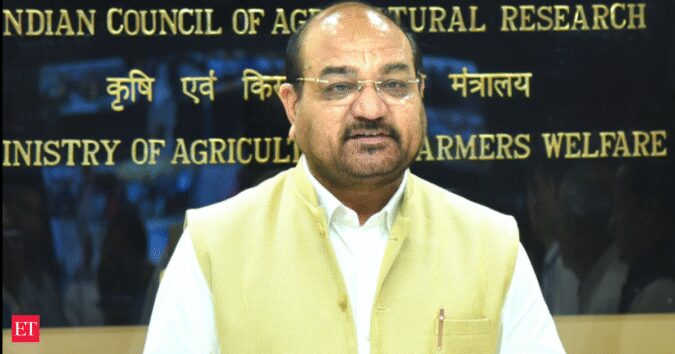
The writer is Director General, Indian Council of Agricultural Research (ICAR) & Secretary, Department of Agricultural Research & Education (DARE), Ministry of Agriculture and Farmers Welfare, Government of India