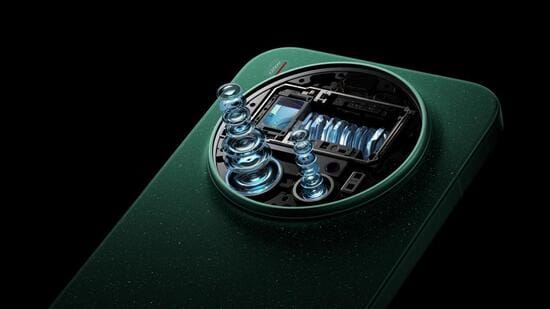
It is often said that every dark night, is followed by a bright day. For Xiaomi in India, that darkest night is behind them, with the crack of dawn clearly visible. Momentum in the last few quarters, across product categories, strengthens Sandeep Singh Arora’s argument that this is the time to “strengthening the ecosystem.” Arora, the chief business officer at Xiaomi India, tells HT in a conversation that 2026 is the year that the company will build on three foundational strengths — great products, honest pricing and a strong ecosystem presence across categories. “You will see us go deeper across mobile, televisions, tablets, and more premium segments,” he says.
The latest piece in that puzzle for Xiaomi India is the Xiaomi 17 flagship smartphone series, which launches in India soon, and will compete with the recently launched Samsung Galaxy S26 series, as well as the likes of theVivo X300 series and the OnePlus 15. Anuj Sharma, the chief marketing officer at Xiaomi India, insists that the camera is the closest Android flagship photography has come to how the human eye sees reality. Sharma illustrates Xiaomi and Leica’s collective vision, “Our philosophy is simple: physics will always beat software.” The phone maker has just extended their partnership with the German camera giants, at a time when OnePlus phones have lost the Hasselblad edge, while Vivo and Zeiss’ partnership is more a continuation.
Arora and Sharma talk to HT about the company’s flagship phone playbook, the premiumisation push in India and how those metrics are shaping up, as well as the complications around memory and storage prices that will force the tech industry to rework larger product plans for 2026. Edited excerpts:
Q. What principles defined the Xiaomi 17 series, and how does it fit your view of what a flagship smartphone should be in 2026 and beyond? Did you have to rewrite the flagship playbook?
Anuj Sharma: I believe we’ve been rewriting that playbook for the last four years. Every year it becomes a bigger challenge because the bar for what a flagship should be keeps moving — and we’re trying to set that bar ourselves. We started relatively late in the flagship conversation, especially in India. Around 2022, we began this journey seriously, including our partnership with Leica. From day one, that was never meant to be just a marketing or licensing arrangement. It began as co-engineering.
The idea was that future flagships would be defined by creation — by imaging, by how we capture moments, and by pushing mobile photography into the next phase. Leica brings unmatched photography expertise, and we bring miniaturisation — how to fit advanced imaging systems into something that still fits in your hand. In 2022 and 2023, we pushed large 1-inch sensors, unseen at the time. In the years after, we improved portraiture and telephoto capabilities. This year, the question became: where do we go next? Iteration alone wasn’t enough. That’s why we moved from co-engineering to co-creation. With the Xiaomi 17 series, especially the 17 Ultra, we asked: how do we move beyond “smartphone photography” and begin approaching what dedicated cameras can do? That is the starting point for our 2026 flagship vision.
So you have hit that orbit, and if I could probably put it in a way, that you are at the top of what smartphone photography should be. But to be honest, you still have DSLRs, those large and medium-format cameras that do some things spectacularly. How do you break away from the smartphone game and start approaching that? And that’s where the 2026 lineup, and essentially where the 17 Ultra starts off. A couple of key technologies. On the 17 Ultra, we have a LOFIC sensor. Nobody else in the industry has it. And that is taking a step towards what should be the future of mobile photography. Secondly, we were trying to solve for the space constraints. Last year, we had a 75mm and a 100mm lens.
But can’t you keep adding because some sensors that might not do justice to that whole telephotography that you want. And hence, you know, we put in the first 200-megapixel continuous optical zoom, which is a massive innovation.
Q. Indian users are heavy multitaskers, increasingly AI-curious, but also very battery-conscious. What user behaviour shaped the Xiaomi 17 series for India?
Sandeep Singh Arora: We see two broad kinds of flagship users. The first is the user who wants cutting-edge camera and imaging technology. For them, the Ultra is the clear choice. If someone really cares about imaging and wants a phone camera system that performs at the highest level, that’s who the 17 Ultra is built for. As Anuj talked about the 75mm and 100mm lens and a 1-inch sensor which was unheard of, and yes smartphone cameras have become great. We are confident this camera will perform better than any other flagship.
Then there’s a second kind of user, someone looking for the best compact flagship experience with no compromises and covers every base. They want top performance, strong battery life, great imaging, and an all-round premium experience in a more compact form factor. That’s where the Xiaomi 17 fits in. So yes, battery matters, AI curiosity matters, multi-tasking matters — but for us, the lineup is designed around distinct premium user intentions rather than one generic flagship profile.
Q. It’s been about two years of a sustained premiumisation push in India. How do you assess progress, and what challenges remain?
Sandeep Singh Arora: It is a journey, and we believe we’ve met the initial milestones we set for ourselves. Now we are accelerating on that journey. There have already been multiple launches this year across categories, and there is much more to come. We now have better capability, including stronger channel capability, and we’re seeing growing consumer demand for premium Xiaomi products. There are potentially as many launches to come, as we’ve already done. We’ve now got the understanding, we’ve met our initial targets and we have built the channel capabilities. We are seeing consumers wanting these products.
Anuj Sharma: If I think back two years, one of our key markers was consumer satisfaction — do consumers like the cameras we are making? It has been a tough journey. From a Leica perspective, this is now the fourth generation of products we’ve launched in India. But in the last 12 to 18 months, the earlier debate about defining a great camera has started to fade away. It gets us to the point where we can believe we are doing justice to the sheer amount of engineering that we’ve put into those devices and the cameras, and that consumers have started to accept that. This now puts us at that cusp from where we can leapfrog to the next level.
Sandeep Singh Arora: That puts us at an important moment. A key challenge that remains, especially in India compared to Europe, is awareness of Leica’s benchmark status in imaging and what exactly this partnership delivers. We need to do more to build that understanding in the market, that is far superior to anything available in other flagship phones.
Q. You mentioned strong momentum not just in phones, but also TVs and tablets. Is premiumisation now a broader Xiaomi strategy in India?
Sandeep Singh Arora: Absolutely. Premiumisation is not just about phones.
We’ve seen very strong response across categories. For example, the 75-inch QLED TV has seen excellent response, as much as 10X of what we expected. In fact, demand was strong enough that we are having internal discussions about production. We’re also seeing good traction in tablets and other categories. There is great acceptance and consumer feedback. So yes, this is now a broader premium and ecosystem journey, not a single-product strategy.
Q. As premiumisation gains traction, do your success metrics change? How do you define success over the next few years, and what role does the channel play?
Sandeep Singh Arora: I’d frame it this way — Xiaomi has one of the largest user bases in India across categories. In smartphones, we have a very large installed base. In televisions too, we have one of the largest smart TV user bases. A significant number of these users are now ready to upgrade, because they’ve had a good experience with our products. Our metrics are not just one number. We look at premium contribution within the portfolio, ASP growth, consumer satisfaction, and increasingly, cross-category ownership.
For example, in TVs, premium contribution increased sharply after we introduced our QLED lineup — it went from 3% to 25% contribution for QLED panels in a year. We expect that to keep growing, because there will be a new QLED series soon, and we expect this contribution to increase to 60%. Similarly in smartphones, if we define premium as a certain price band and above, we expect that contribution to rise significantly. Channel capability is also crucial. Premium products need the right retail experience, the right storytelling, and stronger execution at the shopfront. And one more important metric for us is ecosystem adoption, that is how many customers own multiple Xiaomi products across categories. That is a major long-term indicator of success.
Q. In a market where competitors are taking different camera directions — AI-led imaging, status quo partnerships, or less emphasis on camera alliances — how do you see Xiaomi’s Leica partnership evolving in 2026?
Anuj Sharma: I wouldn’t describe it as a “renewal” in a simple sense, because we didn’t set out with an end date. This is an ongoing vision, to reshape what smartphone photography would be in the times to come. The challenge we set for the core R&D team every year is: how do we move smartphone photography forward — not just for Xiaomi, but for the industry. Are we bridging the gap with DSLRs? Are we helping users capture moments in a way they want to preserve for life?
That’s why we now use the term co-creation. Engineering remains essential as a subset, but co-creation means identifying new problems — that smartphone makers haven’t thought of but the camera makers probably have solved — and how do we put that in phones.
Q. How do you balance camera hardware, image processing algorithms, and now AI? What changes in the AI era?
Anuj Sharma: Our philosophy is simple: physics will always beat software. There is no substitute for optics and hardware. The more you move away from real physics and rely entirely on software to generate an image, the more you are extrapolating from expectations instead of capturing a realistic image. It may be fun to generate an image that shows me standing in the middle of the Antarctic snow, but nobody is going to keep that image. That may be fun for social sharing, but it is not the same thing as photography that preserves memory.
We’re interested in helping users capture images as close to real life as possible. We want to keep moving closer to what the human eye sees — in dynamic range, detail, and realism. Much of the industry focuses on making images look “prettier” through digital processing. We are taking a different direction. Better light capture, stronger optics, improved sensor and zoom systems, and then processing that does justice to the hardware.
Sandeep Singh Arora: Processing is still very important — a lot of it. These systems output an enormous amount of data, and that data has to be processed instantly. So computing is essential in converting and handling the signal correctly. But that is different from a workflow where you send the image to the cloud and heavily alter it. We are not very bullish on that direction for photography, because it can become a warping of memory. For us, processing should support reality capture, not replace it.
Q. Memory and storage prices are rising sharply. Is that influencing your 2026 launch plans, and how do you manage customer expectations if prices rise?
Sandeep Singh Arora: That’s a very important question. What we are seeing is that this is not a one-month phenomenon. It took time for the trade to accept that this is a structural reality that may last for multiple quarters. Consumers too are gradually adjusting to this. As prices go up across the industry, some customers will wait and watch. But we are also seeing the market start to stabilise as trade and consumers adapt. There is some short-term hesitation in parts of the chain, but we are beginning to see the flywheel work again and demand returning.