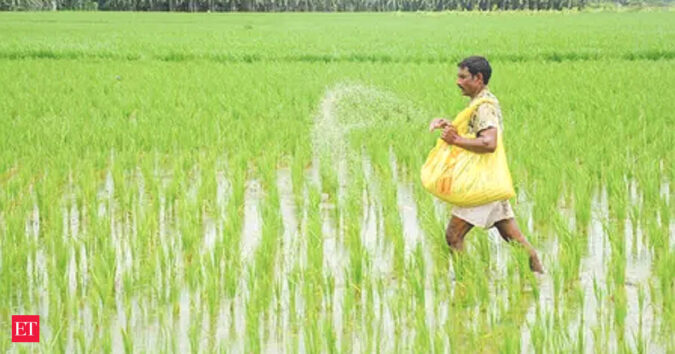
Addressing the Pusa Krishi Vigyan Mela at the Indian Agricultural Research Institute (IARI) campus here, Chouhan said a bag of urea that actually costs Rs 2,400 reaches farmers at just Rs 265-270 because of the subsidy the central government absorbs.
“If such a large subsidy is transferred directly to farmers’ accounts through DBT, farmers will be able to decide which fertilisers to purchase and in what quantities. This system will ensure that the actual beneficiary of the subsidy is the farmer who applies the fertiliser to the fields,” he said.
Currently, fertiliser subsidies in India are primarily transferred to companies rather than directly to farmers. Though the government implemented a DBT system in 2018, the subsidy is released to fertiliser manufacturers only after verified retail sales to farmers.
Over 2.3 lakh retailers across the country use Point-of-Sale (PoS) machines linked to Department of Fertilizers’ e-Urvarak portal, where farmers authenticate their purchases using Aadhaar, Kisan Credit Card or other identity documents, allowing sales to be tracked in real time.
Subsidy claims are then processed within 7-10 working days, covering nutrients such as nitrogen, phosphorus, potash and sulphur.
Chouhan also called for stronger monitoring of funds disbursed to states for agricultural mechanisation and modern irrigation technologies such as drip irrigation, sprinklers, polyhouses and greenhouses, an official statement said.”Simply sending the funds is not enough – a robust monitoring system must be established to ensure that the funds are being used properly. It is important not only to release funds, but also to see the results, this is real reform,” he said.
On farm credit, the minister said 75 per cent of small farmers were now receiving Kisan Credit Card (KCC) loans at an effective interest rate of 4 per cent.
However, he stressed that the goal was not merely to provide loans but to ensure farmers received them on time and without delay, calling for better systems to be put in place.
Suggesting a multi-pronged approach for Indian agriculture, Chouhan said the government should aim at filling the country’s food reserves, increase production of fruits and vegetables and strengthen food security; move beyond just filling stomachs to providing better nutritious food; and raise farmers’ income through integrated farming and other innovations.
The three-day mela that began on February 25 was described by the minister as a “national Mahakumbh” for farmers. It is a gathering of farmers, scientists, entrepreneurs and policymakers from across the country where laboratory research reaches the fields and a roadmap for developed, modern and self-reliant agriculture is prepared.
He directed IARI to organise the fair on a larger scale from next year.
On future strategy, Chouhan outlined the “Developed Agriculture Resolution Campaign,” under which teams of scientists will travel from village to village to educate farmers about new research achievements, disease and pest management, integrated farming models and export-quality varieties through direct communication.