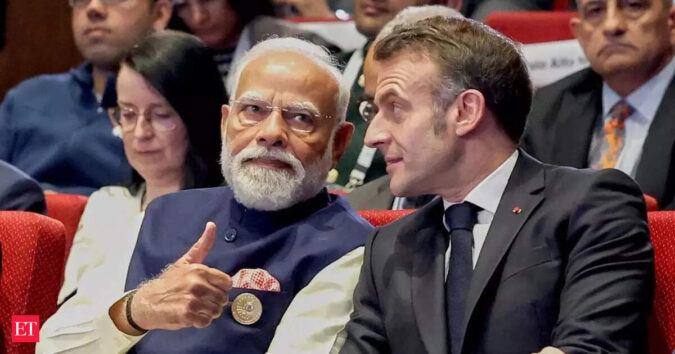
The Amending Protocol was signed by Ravi Agrawal, Chairperson, Central Board of Direct Taxes, Government of India, and Thierry Mathou, Ambassador of France to India, on behalf of their respective Governments.
The Ministry of Finance released a statement regarding that. It stated, “The Amending Protocol provides full taxing rights in respect of capital gains arising from sale of shares of a company, to the jurisdiction where such company is a resident.”
“The Amending Protocol also deletes the so-called Most-Favoured-Nation (MFN) Clause from the Protocol to the DTAC, thereby bringing to rest all issues relating to it.
The Amending Protocol also modifies the taxation of income from dividends by replacing a single rate of 10% of tax with a split rate of 5% for those holding at least ten percent of capital and 15% of tax for all other cases,” it added.
The release also highlighted that the Amending Protocol also modifies the definition of ‘Fees for Technical Services’ by aligning it with the definition in India US Double Taxation Avoidance Agreement, and expands the scope of ‘Permanent Establishment’ by adding Service PE.
The Amending Protocol also updates the provisions on Exchange of Information and introduces a new Article on Assistance in Collection of Taxes, as per international standards. This would enable and facilitate seamless exchange of information and strengthen mutual tax cooperation between India and France. The Amending Protocol also incorporates within the DTAC, the applicable provisions of Base Erosion and Profit Shifting (BEPS) Multilateral Instrument (MLI), that had already become applicable consequent to the signing and ratification of MLI by India and France.
The changes introduced through the Amending Protocol shall enter into effect subsequent to the completion of internal procedures under the laws of both the countries and subject to the terms agreed between the two countries.
The Amending Protocol updates the India-France DTAC to the latest international standards, in a manner that balances the interests of both India and France, and updates it in accordance with international standards.
The Amending Protocol will provide greater tax certainty to the taxpayers and boost flow of investment, technology and personnel between India and France, and thereby strengthen the economic relationship between the two countries.
What changes for investors?
The treaty revision assumes significance against the backdrop of France’s role in the participatory notes (P-notes) market and its relatively favourable capital gains tax position under the existing framework.
Participatory notes (P-notes), issued by Sebi-registered foreign portfolio investors (FPIs) and backed by Indian equities, have been used by overseas investors seeking market exposure with limited documentation.
After India amended tax treaties with Mauritius and Singapore in 2017, France became a relatively attractive route, as FPIs holding less than 10% stake in Indian companies were not liable for capital gains tax on equity sales.
With the proposed revisions, India is expected to gain the right to tax such equity transactions by French investors, potentially aligning the France treaty with those of Singapore and Mauritius.
The changes are also seen in the context of the Supreme Court’s ruling in the Nestlé SA case, which clarified that Most Favoured Nation (MFN) benefits cannot be automatically invoked unless specifically notified.
Tax experts say the amendments may prompt investors to reassess structures, though any shift to jurisdictions such as the Netherlands or Belgium would require meeting substance and anti-abuse norms.