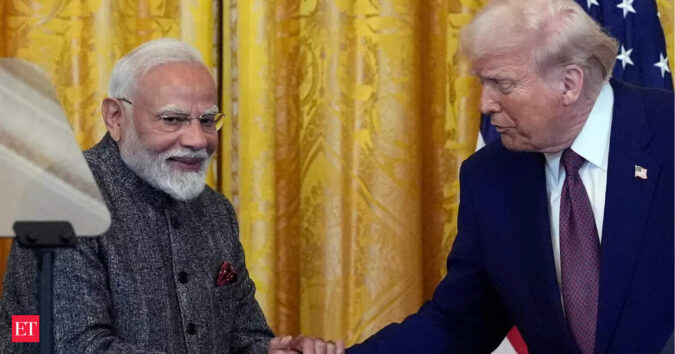
Speaking after the U.S. Supreme Court struck down key elements of his global tariff framework, Trump indicated that India would not see any immediate relief, stressing that existing terms under the bilateral trade understanding would stay in force.
The remarks suggest Washington intends to preserve country-specific tariff arrangements even as it explores alternative legal routes to reinstate wider duties invalidated by the court, keeping pressure on trading partners while avoiding disruption to ongoing agreements.
The bilateral trade pact between India and the United States was finalised earlier in February after months of high-stakes negotiations marked by tariff threats, missed deadlines and repeated political signalling from both sides. Talks accelerated after Washington imposed steep duties on multiple partners in 2025, prompting New Delhi to pursue a calibrated strategy that balanced engagement with resistance to pressure on sensitive sectors such as agriculture, dairy and digital services.
“I think my relationship with India is fantastic,” Trump said while talking to reporters at the White House.
Under the agreement announced by Donald Trump and Prime Minister Narendra Modi, U.S. tariffs on Indian goods were reduced to 18% from levels as high as 50% that had been threatened or applied during the dispute. In return, India committed to limited market-access concessions and adjustments to certain trade barriers, while preserving protections in politically sensitive domestic industries.