Think tank Global Trade Research Initiative (GTRI) said that following this ruling, the US should remove the 25 per cent reciprocal tariffs on India, then about 55 per cent of India’s exports to the US would be subject to only the existing customs duties.
The ruling restores greater predictability in bilateral trade between the two countries, Federation of Indian Export Organisations (FIEO) President SC Ralhan said.
“The recent ruling of the US Supreme Court striking down the reciprocal tariffs under the International Emergency Economic Powers Act brings welcome relief to Indian exporters affected by country-specific duties,” he said.
However, Section 232 tariffs on steel, aluminium, and certain auto components remain in force.
“Importers may seek refunds of duties paid under the invalidated regime, which could provide near-term liquidity support. The decision also opens space for more stable and constructive India-US trade engagement,” Ralhan said.
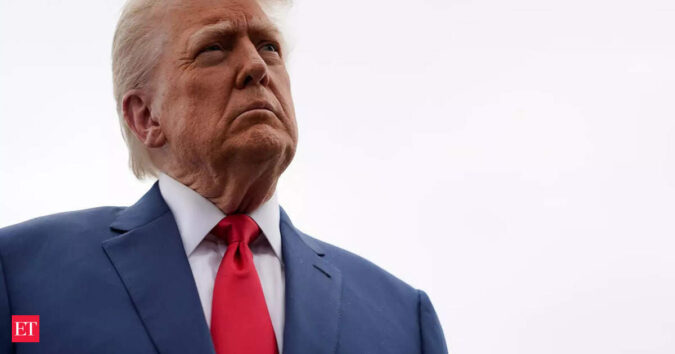
The Supreme Court struck down President Donald Trump’s far-reaching global tariffs on Friday, handing him a significant loss on an issue crucial to his economic agenda.The 6-3 decision centres on tariffs imposed under an emergency powers law, including the sweeping reciprocal tariffs he levied on nearly every other country.
GTRI said the ruling invalidates country-specific “reciprocal tariffs” and fentanyl-linked duties imposed on imports from major trading partners.
On the remaining exports, Section 232 tariffs will continue — 50 per cent on steel and aluminium and 25 per cent on certain auto components — while products accounting for roughly 40 per cent of export value, including smartphones, petroleum products and medicines, will remain exempt from US tariffs, GTRI founder Ajay Srivastava said.
The dispute traces back to April 2, 2025, when President Trump declared America’s chronic trade deficit a “national emergency” and imposed 10 per cent tariffs on nearly all imports, later raised to as high as 50 per cent on selected countries.
“The US administration argued that decades of trade deficits had weakened the US industrial base and posed an economic threat. Critics, however, called the justification unprecedented, noting that the US has run trade deficits since 1975 without such action,” he said.
Three lower courts have already ruled against the Trump administration, he added.
Earlier this month, Trump said that India and the US have agreed on a trade deal under which Washington will bring down the reciprocal tariff on Indian goods to 18 per cent from the current 25 per cent.
However, tariffs imposed under Section 232 on products such as steel, aluminium, and certain auto components remain in force, and exporters in these sectors will continue to face cost pressures, Ralhan said.
While the US administration may explore alternative legal routes to reintroduce certain measures, the judgment offers an opportunity to strengthen dialogue and pursue a more stable and mutually beneficial trade framework between India and the US, he said.
“Importers who paid duties under the invalidated tariff regime may also seek refunds, which could ease liquidity concerns and support trade flows in the near term,” he added.
During 2021-25, the US was India’s largest trading partner in goods. The US accounts for about 18 per cent of India’s total exports, 6.22 per cent in imports, and 10.73 per cent in bilateral trade.
In 2024-25, the bilateral trade touched USD 186 billion (USD 86.5 billion exports and USD 45.3 billion imports).