When this author started studying economics in university in the early 2000s, the Lewis Model was still among the cornerstones of the course of development economics. Simply put, the Lewis Model envisages economic growth by a movement of workers from a traditional low productivity sector (such as agriculture) to modern high productivity sector such as industry. It is built on the premise that the agrarian sector will not lose marginal output as less productive workers migrate to industry, while the latter can always expand output with more workers and reinvested profits from existing businesses. Eventually, the economy will land in an equilibrium where wages in the two sectors have equalised and output in the latter has increased significantly without diminishing production in the former. Everybody ends up as a winner here.
Arthur Lewis developed his model in the 1950s. He died on 15 June 1991, a week before the Narasimha Rao government assumed office in India and opened the proverbial floodgates to reforms. Pre-reforms, the biggest critique of India’s economic policy was that policy stifled enterprise and therefore a Lewisian reinvestment of profits to expand the modern (private) sector in India. Three and a half decades and plethora of reforms later, India is yet to realise the fruits of the promised Lewisian transformation. Agriculture continues to employ many more people compared to other most modern sectors of the economy.
What went wrong? Well, Lewis Model’s world started dying soon after it received the highest possible recognition in the form of a Nobel Prize in 1979.
Two factors can be flagged, one conceptual and another technological. Lewis’s world did not envisage what economists call an open economy framework where countries trade between themselves and where a country with a lower cost of production can overwhelm a country’s modern sector with a higher cost of production. This is largely the story of the advanced capitalist countries between when Lewis was awarded his Nobel Prize in the late 1970s and now. They first lost out to Japan and continue to lose out to China today. The second is a problem Lewis should have seen coming. Capitalism, as was pointed out by even classical political economists such as Karl Marx, has a tendency to substitute labour with capital to minimise conflict over terms of trade. Every path breaking innovation accelerates this process to a different level. What started with the spinning jenny and the steam engine during the industrial revolution in England has graduated to a new level today where robots work in factories which do not even require lights. Reinvested profits, simply speaking, do not need more workers to add to output.
The real world changed via a dialectic between these two tendencies. In many instances, it was not the machine replacing the working man. It was a working man in another country willing to work for a lower amount of money. This happened in industry but also in services where the proverbial sweatshop operated not on assembly lines but in front of computers and the workers did not wear boiler suits but casual clothing in air-conditioned offices. But capital continued to look for ways to reduce labour usage in production. China, the biggest beneficiary of export led growth, today produces and deploys more robots than any other country.
India’s economic journey since 1991 is best summarised in two sentences. We failed to ace the game of making things cheaper than China to sell to the West or to ourselves, but did very well in the game where services were to be sold to the West.
The former continues to hurt us and has kept us from realising our Lewisian transformation potential. But the latter gave us the proverbial raft to navigate the turbulent sea of political economy by achieving some sort of upward mobility for a proportionally insignificant but numerically significant number of workers.
The advent of AI means that this window has begun to close for India as we speak. The technological disruption will take away opportunities of white-collar employment and the opulence it brought for a lot of such existing or prospective workers going forward. Unlike Lewis’s world where traditional sector workers were perfectly happy to work for low wages in the modern sector, this lot will not be able to reconcile the shutting down of such opportunities and the loss in living standards which will follow. That is pure human nature. Downward mobility is infinitely more difficult to digest than always being poor.
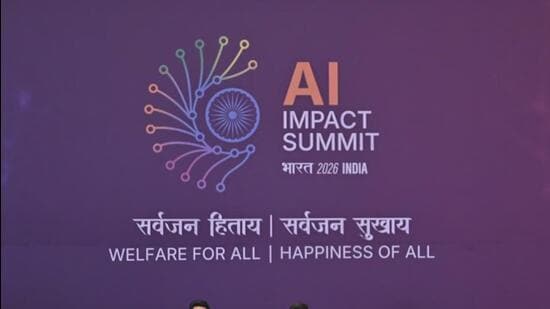
The Galgotias University stall being thrown out of India’s AI Summit – they faked a Chinese robot as their own AI innovation and have earned international ridicule for them as well as the country – is the best canary in the coal mine moment of what awaits people with mediocre copycat attitude to technology in future job markets. They will die, professionally speaking. It is only fair that the stall and the institution in this case be criticised, even penalised. But the larger challenge is going to be how do we deal with millions of such workers and students who will see their career runways destroyed by an AI strike even before they have taken off.
Capital invested in these companies might very well survive by building strategic alliances with its peers successful on the AI frontier. What will be left is the discarded labour which will continue to haunt the social landscape like radioactive waste – entitlement-wise fissile but not creating energy which will generate incomes for them or power the economy.
Prudence demands that society think about this crisis and brainstorm social and political preparations. The worst part about this scenario is even a success in this game – India becoming a global AI leader – is going to be counter-productive from the perspective of the employment generation.
Technocrats will continue to work on AI. Capitalists will continue to pay them to do it. But the social scientists must begin to envisage a world where Lewis will be turned upside down on steroids – modern sector shedding workers without a loss in output, but workers which have nowhere to go to. Future generations of economics students must be prepared to engage with de-development economics rather than just development economics.