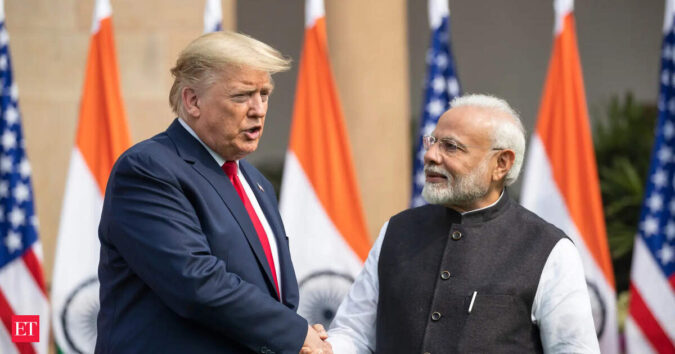
New Delhi: India and the US announced a framework for an interim trade agreement under which tariffs on “originating goods of India” will be reduced to 18% from as much as 50%. Clearing the path for a full-fledged bilateral trade agreement (BTA), the interim pact covers tariff cuts and non-tariff barriers with a broader, legally binding BTA covering goods, supply chains and digital trade. This is in line with statements issued by Prime Minister Narendra Modi and US President Donald Trump on February 2.
India’s exports of about $44 billion to the US will enter the American market at zero reciprocal tariffs under the first phase of the BTA, which is expected to be signed by mid-March. This will include spices, tea, coffee, copra, coconut oil, certain nuts, banana, guava, mango, bakery goods, and home decor.
Indian goods worth about $30 billion will attract an 18% tariff, including those from labour-intensive sectors. There will be no change in duties on goods worth $12 billion, including steel, copper and certain auto parts.
US goods such as wines and spirits, dry fruits, and high-end cars and motorcycles will enter India either duty-free or at reduced import tariffs, a move that is likely to make these products cheaper here. India will eliminate or reduce tariffs on all American industrial goods and a wide range of food and agricultural products, including dried distillers’ grains and solubles (DDGS), red sorghum for animal feed, tree nuts, fresh and processed fruit.
Non-tariff Barriers to be Addressed
Soyabean oil, wine and spirits are also on this list. India has also agreed to address long-standing non-tariff barriers to the trade in US food and agricultural products.
American apples, cotton, walnuts, pistachios, almonds, medicines, cosmetics and medical devices will continue to be imported. Implementation of the pact will lead to the grant of duty concessions by India on American goods.“This framework reflects the growing depth, trust and dynamism of our partnership,” Prime Minister Narendra Modi said in a post on X. “It strengthens ‘Make in India’ by opening new opportunities for India’s hardworking farmers, entrepreneurs, MSMEs, startup innovators, fishermen and more. It will generate large-scale employment for women and youngsters.”
New Delhi has fully protected sensitive agricultural and dairy products such as maize, wheat, rice, soya, poultry, milk, cheese, ethanol (fuel), tobacco, certain vegetables and meat as no duty concessions will be granted to America on these goods, said commerce and industry minister Piyush Goyal.
The US, through a separate executive order, eliminated the 25% tariffs on India for purchasing Russian oil from February 7. It will monitor the direct or indirect import of Russian oil by India.
If this happens, US officials will recommend “whether and to what extent I should take additional action as to India, including whether I should reimpose the additional ad valorem rate of duty of 25% on imports of articles of India,” Trump said in his executive order.
The reciprocal tariff of 25% will be reduced to 18% after the US issues an executive order in this regard, which is expected soon. The agreement will open a $30 trillion market for Indian exporters, especially MSMEs, farmers and fishermen, according to Goyal.