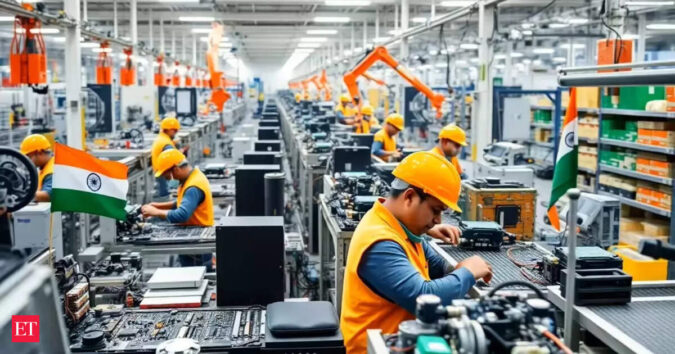
From the perspective of the Mahindra Group-spanning automotive, farm equipment, technology, logistics, financial services, tourism, and aerospace- the budget’s emphasis on manufacturing depth and strategic self-reliance is clearly visible. Equally commendable is the strong emphasis on the services sector as a core driver of Viksit Bharat, recognising its role in employment generation and exports.
Measures supporting electric mobility and the energy transition stand out. The extension of basic customs duty exemptions for capital goods used in lithium-ion cell and battery energy storage system manufacturing, combined with proposed exemptions for critical minerals processing and rare earth magnet corridors, directly strengthens India’s EV supply-chain resilience. These steps are essential as India seeks to localise value creation in electric mobility and advanced manufacturing.
The increased outlay for the Electronics Components Manufacturing Scheme to ₹40,000 crore further reinforces the government’s intent to build scale and momentum in domestic manufacturing ecosystems. Complementing this are investments in Hi-Tech Tool Rooms and schemes for construction and infrastructure equipment, which will enhance access to high-precision manufacturing capabilities critical for industrial competitiveness.
Infrastructure and logistics continue to be powerful macro enablers. New Dedicated Freight Corridors, expansion of national waterways, and the Coastal Cargo Promotion Scheme can materially reduce logistics costs and improve supply-chain efficiency. For diversified manufacturers, such connectivity is central to improving cost structures, responsiveness, and sustainability outcomes. The introduction of City Economic Regions, with reform-linked funding, also offers a fresh lens for region-led industrialisation-integrating jobs, housing, mobility and manufacturing into coherent growth corridors.
Agriculture and rural prosperity remain core to India’s economic and social fabric. The launch of Bharat-VISTAAR, a multilingual AI-driven advisory platform, holds promise for improving farm productivity and risk management through customised insights. Initiatives promoting high-value crops and rural entrepreneurship-particularly women-led enterprises through SHE-Marts and Lakhpati Didi-can strengthen rural incomes, stimulate demand, and support the next wave of mechanisation and mobility in India’s hinterland.A major push on tourism-with high-speed rail corridors, medical tourism hubs, eco-trails, guide skilling, heritage site upgrades and improved connectivity-will further enhance growth in a sector that contributes nearly 5% of India’s GDP.
In services and technology, the rationalisation of safe harbour provisions for IT services, higher eligibility thresholds, and faster unilateral Advance Pricing Agreements provide welcome tax certainty. Combined with the formation of a high-powered committee to help India achieve a 10% global share in services by 2047, these measures reinforce India’s ambition to lead in emerging areas such as AI and digital transformation.
Financial sector reforms also merit attention. Steps to deepen the corporate bond market, introduce market-making frameworks, and improve MSME liquidity through stronger TReDS integration will enhance capital access and risk management across the ecosystem, particularly for NBFCs serving underserved segments.
Overall, Budget 2026–27 is less about short-term stimulus and more about steadily building long-term economic architecture. For Indian industry, the message is clear: the foundations for the next phase of growth are being laid. The emphasis on sabka saath, sabka vikaas-ensuring access to opportunity across communities-will be key to delivering robust and sustainable growth. It is now up to public and private enterprise to build, invest, and deliver at scale.
The writer is Group CEO, Mahindra Group