Under the new codes, government permission is not required for layoff, retrenchment and closure of units with workers’ strength of up to 300. Earlier, units with up to 100 workers did not require such permission.
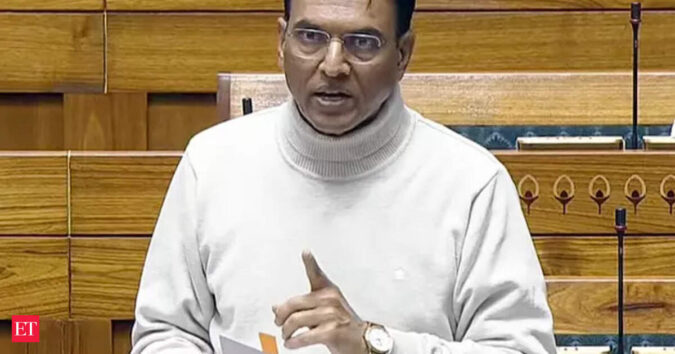
Addressing the Times Network India Economic Conclave, Mandaviya said, “We have formalised employment in the country with increasing the number of workers to 300 per unit, which was earlier 100.”
Earlier employers used to provide formal employment to 100 workers to avoid legal hassles and the rest were employed informally, he said.
He said new codes have formalised employment of the left-out workers and they will get all benefits that an enrolled employee gets.
On concerns about encouraging inspector raj by increasing compliance burden, he explained that the inspector will be facilitator and not an obstructer in the work of an industry.The minister said he will ensure all safety measures like deployment of fire safety, lighting, security — prerequisites for allowing women to work in night shifts, especially in mining sector.
He assured that all provisions in the new codes are made keeping in view of changing times and requirement of modern industry practices.
On 21 November 2025, India scrapped 29 old labour laws and rolled out four new labour codes, transforming workplace rights. These include the Code on Wages 2019, Industrial Relations Code 2020, Social Security Code 2020, and Occupational Safety, Health and Working Conditions Code 2020. Employees now get timely wages, gratuity, fixed work hours, stronger safety rules and free health services.
The reforms include expanded rights and safety for women, including night shifts, free annual health check-ups for workers aged over 40, pan-India ESIC coverage, including hazardous process units, and a single registration, licence and return system.
Under the Code on Social Security, 2020, all workers, including gig and platform workers, will be covered by social security. All workers will get PF, ESIC, insurance, and other social security benefits.
Also read: Could India move to a 4-day workweek? What the New Labour Codes actually permit
Under the Code on Wages, 2019, all workers will receive a statutory minimum wage payment. Minimum wages and timely payment will ensure financial security.
The ESIC coverage and benefits are extended pan-India — voluntary for establishments with fewer than 10 employees, and mandatory for establishments with even one employee engaged in hazardous processes.
Now, fixed-term employees (FTE) will receive all benefits equal to those of permanent workers, including leave, medical, and social security.
The codes have defined ‘gig work’, ‘platform work’, and ‘aggregators’ for the first time.
Aadhaar-linked Universal Account Number will make welfare benefits easy to access, fully portable, and available across states, regardless of migration.
Plantation workers will be brought under the OSHWC Code and the Social Security Code.
Digital and audiovisual workers, including journalists in the electronic media, dubbing artists, and stunt performers, will now be entitled to full benefits.
With inputs from PTI