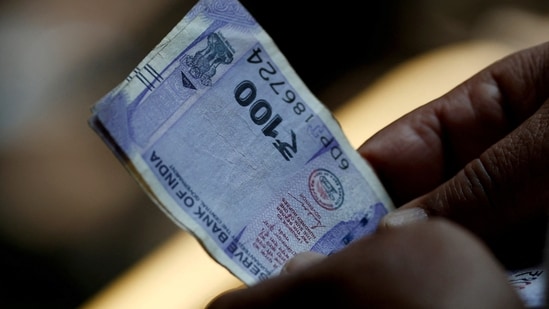
The Indian Rupee slipped to an all-time low for the fourth consecutive session on Tuesday, as an India-US trade deal remained elusive.
The rupee slipped to an all-time low of 90.82, eclipsing its previous record low of 90.7875 hit on Monday, due to dollar bids spurred by the likely maturity of positions in the non-deliverable forwards market and persistent FII outflows.
The rupee is Asia’s worst performing currency this year, declining as much as 6% against the US dollar, as steep US tariffs weighed on Indian exports. India is the only major economy without a trade deal with the US.
Rupee impact on India’s stock market
Such has been the rupee slide that it’s now threatening the nascent recovery of India’s $5.2 trillion stock market.
The benchmark NSE Nifty 50 Index retreated about 1.7% from near an all-time high in November, before recovering some losses. In December alone, global funds have withdrawn $1.6 billion from local equities, reversing $1.3 billion of inflows over the prior two months. They also pulled money from local debt.
Clearly, the steepest US tariffs in Asia have weighed on sentiment as traders await a India-US trade deal.
“Foreign investors have continued to pare exposure to Indian equities and debt, resulting in steady dollar outflows,” Akshat Garg, head of research at Choice Wealth, told Bloomberg News. There is “growing pressure on the currency amid a combination of global uncertainty and India-specific capital flow challenges.”
Stocks to buy amid a Rupee slide
A weaker rupee does benefit companies that earn a large share of revenue overseas, particularly technology exporters. The Nifty IT index has climbed about 14% since the end of September, coinciding with the period in which rupee losses deepened.
Equities face muted returns as weaker rupee, range-bound government bond yields, and modest earnings growth “favour selective sectoral exposure”, said Dhananjay Sinha, head of research at Systematix Shares and Stocks Ltd.
A sliding rupee benefits tech, pharmaceutical and metal stocks, but hurts banks, energy producers and infrastructure companies, Sinha wrote.