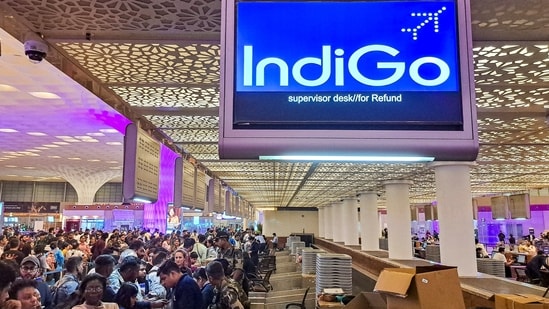
As the IndiGo flight status, or lack thereof, unravelled at India’s airports and share price went into tailspin, the civil aviation minister called for airlines in the world’s fastest growing aviation market.
That’s a wonderful idea. After all, IndiGo—with its outsized market share of 65%—brought down India’s aviation industry at large in early December. The affected assengers took to social media to vent their anger and demandedthat more airlines take to the skies.
That’s easier said than done, for India is a graveyard of sorts for airlines.
More than 20 airlines have shut down in India since 1994 when privatisation of India’s aviation sector began. Several of those were in the last 10 years alone, including major players like Jet Airways and GoAir and regional carriers Air Pegasus, Air Costa, TruJet, Zoom Air, Air Odisha and Deccan Charters. What’s more, India privatised its national flag carrier, Air India, after failing to make it a profitable enterprise.
While Indian carriers reported a total net loss of ₹924.40 crore in FY24, the figure widened to ₹5,289.70 crore in FY25, according to data presented by Minister of State Civil Aviation Murlidhar Mohol in the Lok Sabha Thursday. That includes ₹5,832.3 crore loss reported by Air India and a profit of ₹7,253.3 crore by IndiGo parent InterGlobe Aviation Ltd.
Star Air and IndiaOne Air were the other two profitable carriers, while every other airline involved in passenger service lost money.
Why would then anyone invest in an airline in India, more so when even a Tata Group has had to consolidate its four airline brands into two?
Clipped Wings
Still, there have been attempts, at least for regional aviation.
- Jettwings Airways, which seeks to redefine air travel in Northeast India, obtained a so-called No Objection Certificate to from the Ministry of Civil Aviation in June 2023. More than two years later, the airline has yet to acquire the promised Embraers in its fleet and start operations.
- Lucknow-based Shankh Air recieved an NOC in September 2024. An office is set up inside the Lucknow airport but there are no places on the runway as the airline doesn’t have an Air Operating Certificate. Shankh Air has made statements on induction of both Boeing and Airbus aircraft; its website shows a Shankh Air-liveried Embraer.
- The Kerala-based Al Hind Airlines received its NOC in 2024 with plans to launch in 2025. Its plane of choice is the ATR 72-600 but that’s yet to take flight either.
To be sure, aviation is an expensive enterprise with high cost of entry and then multiple entry barriers. It is also one of those businesses where the cash burn is very high before revenue starts coming in.
Take Vistara, for example. The company was incorporated in November 2013 but the first flight took off in January 2015. Akasa Air was incorporated in late 2020, while the first flight took off in August 2022.
The Struggle Is Real
Even those who have started operations are struggling to stay afloat, or even spread their wings in the world’s fastest growing aviation market.
- Fly91, India’s newest regional carrier launched in March 2024, has made tall claims of 35 planes in its fleet by 2030 and at least 10 by the end of FY26. As of December, it has three aircraft.
- Star Air, the Embraer-only operator, expects 15 planes in its fleet by March 2026 but has been slow with induction.
Not just regional carriers, Akasa Air, Air India and Air India Express have been struggling with inductions due to manufacturing delays by the likes of Airbus and Boeing. That, along with high demand, has pushed lease rates higher.
According to the International Air Transport Association, India’s air traffic is growing twice as fast as its gross domestic product.
According to MoS Mohol’s submission in the Lok Sabha, air passenger traffic grew 7.7% year-on-year to 16.55 crore in FY25. In the six months through 30 September 2025, that figure stood at 8.01 crore. That compares with India’s GDP growth rate of 6.5% in FY25 and 7.2% estimated for FY26.
Tailnote
For four to five large airlines to become a reality, it will take far too many deeper pockets to sustain losses for a period of time before they can make a dent to the market. IndiGo’s market share is a function of capacity which has come over 19 years of operations, and Air India not expanding since it was government owned.
Now, with IndiGo and Air India in a tussle for market share, other carriers will it even harder to breakeven and grow.
The clamour for more airlines sounds nice in a situation like now, but in reality, India needs a better passenger charter which is the right stick for the airlines, rather than regulation and more competition.