The central government recently enacted the Flight Duty Time Limitation (FDTL) norms in the airline industry. The rules seek to address the issue of pilot fatigue through increased rest time and reduced landing in the night hours.
The government has planned phase-wise implementation so that the airlines get adequate time to prepare for the rules. The first phase of the rules were implemented in July this year while the second and final phase was implemented in November to mitigate logistical challenges.
Aftermath of the rule
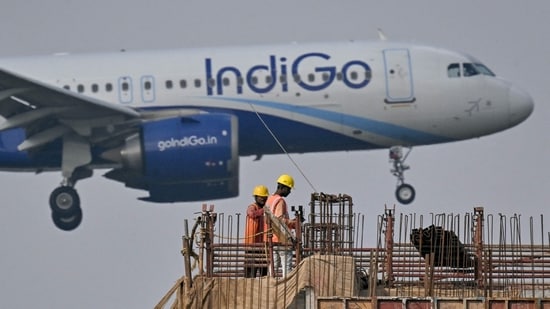
A review of the Indian aviation industry before enactment of the rule is in place. IndiGo and Air India are the two major carriers which command over 90% market share in India domestically. While Air India was able to more-or-less adapt to the rule, IndiGo was found completely off the guard. This led to a complete standstill where hundreds of flights were being cancelled leading to a meteoric price hike and delay in the travel plans. Worse off, the consumers signed up for the same carrier given that air travel is no more avoidable and lack of alternatives. The affair was such that the government had to come up with a selective waiver so that the normal schedule could be restored, even if it meant putting consumer safety in jeopardy for which the norms were pronounced in the first place.
Competition as a structural issue
It is important to reassess the legitimacy of the proposed FDTL norms before commenting on competition. The rules ensure better rest time for the pilots and reduce the number of landings in night hours ensuring better working conditions for the pilots. This is in the aftermath of the recent Air India flight tragedy where pilot fatigue figured as one of the central issues in flight safety. The airline companies were further given a minimum time of six months to comply with the norms so that there are no implementation challenges in preparing the fleet for additional pilots.
It is against this backdrop competition assessment ought to happen. It is important to note that the Directorate General of Civil Aviation (DGCA) is the sector-based regulator and it is best equipped to legislate on industry-specific questions such as pilot fatigue and flight timings. The question of promoting competition, on the other hand, is considered antitrust authority’s prerogative given its economy-wide expertise. The Competition Commission of India has wide discretion, like other global competition bodies, in terms of how it wants to promote competition and consult sector-based authorities.
It is known to everyone that the Indian airline industry is a near-duopoly. What remains unsaid is that as soon as a player gets more than 50% market share which is, indeed, the case with IndiGo, there is a deemed dominance which comes along with special responsibility to comply with the provisions of the law. This responsibility is starker in industries such as the aviation sector which is considered vital for transportation and logistics.
The Commission could have very well imposed the ‘essential facility doctrine’ in any of the two cases filed before it, at the very least, and ensured that there is minimum inconvenience caused to the consumers. The DGCA could have ensured robust implementation of such obligations as a sector-based authority.
Cautious optimism
The long-term solution is that the Indian government promotes competition at a policy level. This would involve providing incentives to new players to enter the market and ensure there is no dependence on a single company.
Some areas of thought include the CCI conducting a market survey in terms of which players are willing to enter the airline industry. The government can consult stakeholders in ancillary sectors such as logistics and automobiles to better understand the economics. The sector-based regulator could benefit from both where it is in better command to prescribe the industry standard as a norm so that it, in itself, could work as a competitive edge for the complying companies.
A note of caution on promoting competition is warranted. The most obvious choice to democratise the market is relying on a few ‘national champions’. Such an approach could have its own limitations as seen in the past in the telecom sector. The government needs to be sceptical to an extent that the new players are only incentivised only to provide choice to the final consumer. Any waivers beyond that limit may worsen the problem of duopoly putting consumers at a further disadvantage.
Conclusion
The current disruption in flights are only a symptom of a larger cause which is the absence of competition in the airline industry. The need of the hour is for the government to promote competition in the aviation industry and ensure that there are suitable incentives for new entrants in the market.
The CCI should invoke the ‘special responsibility’ wherever possible so that the consumers are not in jeopardy in case of a dominant entity. Both the measures should ultimately contribute to better sector-based regulation ensuring holistic growth of the industry in consumer interest.
The authors are Sumit Jain, founding director at the Centre for Competition Law and Economics and Dr. Nikita Shah, assistant professor at Nirma University.