“This is a cess, and it is placed not on any essential commodity…. We wish to impose such a cost, so that it is a deterrent, so people tend not to use it,” she said, while moving the Health Security se National Security Cess Bill, 2025 in Lok Sabha.
She said the purpose of, is to create a “dedicated and predictable resource stream” for two domains of national importance – health and national security. Sitharaman assured the house that proceeds from the cess, to replace compensation cess on pan masala under the goods and services tax, will be shared with states for health schemes.
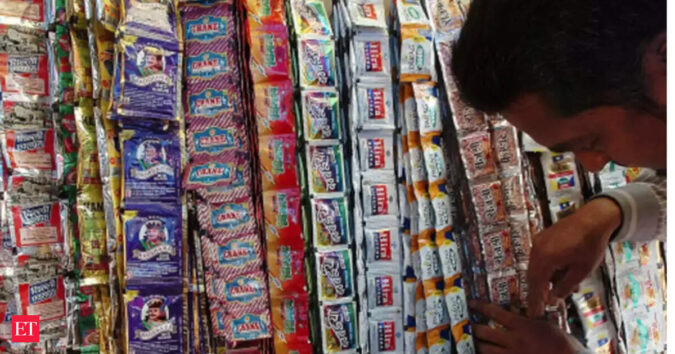
Lok Sabha passed the Health Security se National Security Cess Bill, 2025 which will replace compensation cess on pan masala and gutkha in “a couple of weeks”.
Currently, pan masala, tobacco and related products attract 28% GST and a compensation cess, which Sitharaman said is slated to end in a few weeks after which it will attract 40% GST and the new cess.
The levy will be over and above 40% GST based on its consumption, and there will be no impact of this cess on GST revenues, she added. Explaining the need for a separate bill, she added that a separate cess was created as excise duty cannot be levied on pan masala, unlike tobacco products. “The cess liability will be different for every factory, depending on their production capacity,” the FM said. Later in Rajya Sabha, during discussion on the Central Excise (Amendment) Bill 2025, the finance minister said that the centre will take care that the livelihood of tobacco farmers and Bidi workers is not affected and the government is engaging with state governments to help relocate these farmers to another cash crop. She added that over 1.12 lakh acres of land has shifted from tobacco to other crops between 2017-18 and 2021-22.
The upper house later returned the bill to Lok Sabha, marking Parliamentary nod. On Wednesday the Lok Sabha had passed the Bill.