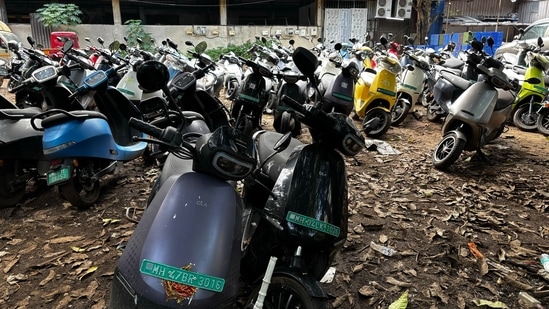
Ola Electric Mobility Ltd. has initiated a service reboot to address after-sales woes of a shrinking customer base.
The company led by billionaire Bhavish Aggarwal is deploying a 250-member rapid-response team across the country to clear service backlogs and stabilise customer support, PTI reported on Wednesday, citing sources. HT.com hasn’t independently verify the news.
The team includes technicians as well as operational specialists led by the core leadership team. They will clear pending repairs and improve the availability of spare parts. The taskforce is coordinating with service centres to address all kinds of delays—from battery replacement to routine repairs. Internal targets have been set to dramatically reduce wait times.
According to Aggarwal’s social media posts, he too is involved on the ground.
Ola Electric has a Service Problem
Ola Electric’s service woes first cropped up in September last year after more than 1 lakh complaints were registered with the Central Consumer Protection Authority. Complaints ranged from malfunctioning hardware to glitching software. That resulted in a pile-up and backlog.
The company did try to address the problem by expanding its sales and service network in December 2024. Later, it shut some service centres and regional warehouses as part of a restructuring and shift in service strategy. The key changes incuded:
- Closure of regional warehouses: Ola Electric is now using its roughly 4,000 retail outlets across India for service, inventory and spare parts.
- Automation and layoffs: In early 2025, over 1,000 contractual workers as well as employees across various departments—sales, service and warehouse—were let go to automate front-end operations.
- In-app service appointments: Ola Electric is also allowing customers to book service appointments and buy spare parts on its app to bypass clogged service centres.
- Ola Hyperservice: The initiative, first announced in the throes of its service problem in September 2024, was expanded in October 2025 to open source its proprietary service infrastructure and technology.
“The company’s Hyperservice initiative is aimed at fundamentally transforming how electric two-wheelers are serviced in India,” PTI cited sources as saying. “The company has nearly cleared service backlogs in Bengaluru under this initiative, and will replicate this framework across the country.”
Ola Electric has a Sales Problem
Still, Ola Electric sales fell to the lowest in at least 36 months in November 2025, even as the former market leader finds itself in “sacrifice for survival” mode.
The Bengaluru-based pureplay EV two-wheeler maker sold 8,400 electric scooters and motorcycles in November 2025, as against 29,322 units in the year-ago period—down 71% year-on-year for the month, according to VAHAN data. That’s the lowest since at least September 2022, when Ola Electric sold ~9,800 units, and down nearly 80% since peak sales of 53,647 units in March 2024.
The steep decline in Ola Electric’s sales is emblematic of the financial quagmire that the company finds itself in.
Following its second-quarter results where revenue fell 43% year-on-year, Ola Electric slashed its annual sales forecast by 40% to 2,21,000 units for FY26.
“For the auto segment, we expect lower volumes than the Q1 guidance as we continue to focus on margin and cash discipline in a hyper competitive market,” according to a shareholder letter. “For H2 FY26, we target total deliveries of approximately 100,000 units.”
In October and November, Ola Electric sold a total of 24,449 units—meaning, it has to sell at least 18,888 units every month for the rest of the fiscal year to meet its revised annual target.
“The company’s situation is already showing visible strain,” Rishi Vora and Apurva Desai, analysts at Kotak Securities Ltd., wrote in a 6 November report. “Without acknowledging and addressing core issues (volumes), the fragility will rapidly escalate into a full-blown crisis.”